The Sen energy lines: how traditional Thai massage actually works
The Sen energy lines that shape every traditional Thai massage session
Traditional Thai massage isn’t about pressing harder or stretching further than any other massage might. What actually makes it work is that every stretch and every point of pressure follows one of ten named Sen lines, and which line I choose is what decides what the session does for your body. That’s quite different from the usual ‘improves flexibility’ claim you’ll see everywhere, and it’s something worth understanding before you come in for your next session.
I’m Jariya Malone, and I trained at Bangkok’s Wat Po temple. The ten main Sen lines are carved into the temple’s own stone tablets, which date back to the reign of King Rama III. Thai traditional medicine says more than 70,000 Sen run through the body, according to UNESCO’s record of Nuad Thai.
In real practice, that gets narrowed down to ten. And that narrowing matters - it means a proper session is targeted, not just a general rub over your whole body.
Sen Sumana and the spine work most sessions open with
Sen Sumana runs the full length of your spine. It’s considered the most important of the ten lines, and in Thai tradition it’s linked to breathing and digestion. In practice, this is usually where a session begins.
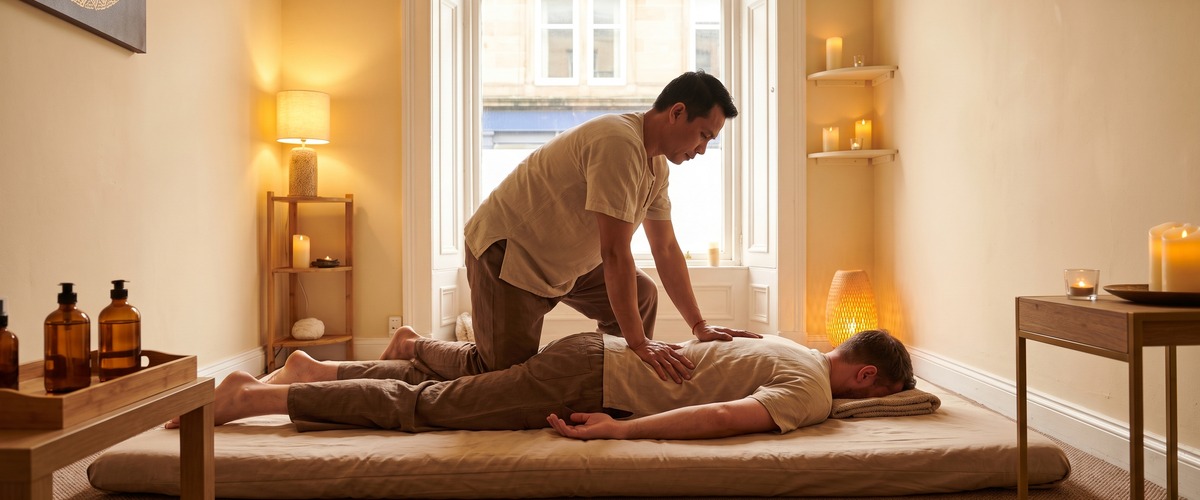
I trace the spine with steady palm and thumb pressure. I’m not just kneading the muscle either side of it. You can book a session online if you want to feel the difference between that line work and a standard back rub.
If you’ve been carrying lower back pain for years, this is often where you’ll notice it first. The pressure moves along the line rather than circling over the sorest spot.
Sen Ittha and Pingkhala: why shoulder pain travels down the back
Sen Ittha runs down the left side of your body, and Sen Pingkhala mirrors it on the right. Both are linked to headaches, neck pain, and back pain that spreads.
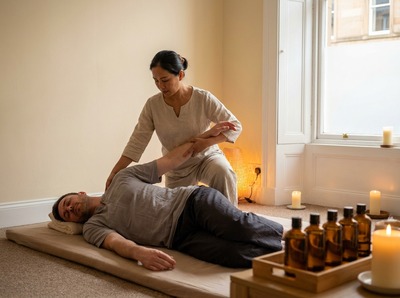
I see this pattern often with clients here in Greenock: tightness in one shoulder that travels down the same side of the back. One client described exactly that, a tight left shoulder running down her back. By the end of her session, the tightness was gone completely, and she slept better than she had in ages.
That relief holds because Ittha or Pingkhala is worked as one continuous line. Treat the shoulder and back as two separate spots, and you simply don’t get the same result.
Sen Kalathari: the line behind real hip and limb mobility
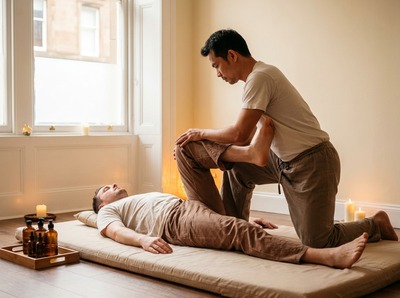
Sen Kalathari spreads out from your navel along the inner and outer limbs. It’s the line behind those hip openers and leg stretches people picture when they think of Traditional Thai Massage. You’ll often hear the generic claim that stretching loosens your hips.
Kalathari work goes much further than that. I follow one pathway from your core all the way down to your ankle, so your hip rotation and lower-leg movement shift together, rather than being treated as separate joints.
This is also the line clients are talking about when they leave feeling lighter and more mobile, rather than just relaxed. What you get is real energy and range of movement, not just an hour of calm.
Sahatsarangsi and Thawari: the arm work desk workers actually need
These two lines run down your arms. Tradition ties them to shoulder and arm tension, which is exactly the pattern we see in office workers across Inverclyde who spend all day at a keyboard. Not sure whether to book a Traditional Thai Massage or a Thai Sports Massage for sore arms and shoulders?
Here’s the difference. Sahatsarangsi work follows your arm as one line, from shoulder right down to hand. It never treats the forearm or the shoulder joint in isolation.
Why generic flexibility claims miss what Thai massage techniques actually do
Search ‘Thai massage benefits’ and you’ll find the same list on every page: better flexibility, less back pain, fewer headaches, more energy. None of it’s wrong exactly. But none of it explains which line does which job, and that’s really the part that decides whether your session helps you.
The pressure-equals-results myth
I’ve watched this myth play out before. One client arrived convinced they needed the hardest pressure possible, sure that harder had to mean better. What actually helped was steady, moderate pressure along the Sen lines of the upper back, paired with assisted stretching.
Not brute force at all. Three months of regular sessions later, their neck pain had genuinely changed, and they’d stopped asking for maximum pressure.
A 2015 randomized controlled trial led by researcher Kanogporn Damapong backs this up. Court-type traditional Thai massage cut pain in chronic tension-type headache patients about as well as the prescription drug amitriptyline. It did so with measured pressure along mapped lines, not force.
What a mapped stretch does that a generic stretch doesn’t
A generic stretch works one joint. A Sen line stretch follows a path that often crosses two or three joints at once, which is why clients so often feel a change somewhere they didn’t expect.
At Thai Massage Greenock, every session is built around those lines. It’s also why Thai massage in Inverclyde, done with real attention to the Sen lines, gets you results a rushed stretch routine simply never will.
How does traditional Thai massage actually work session to session
It works by building on what your body showed me last time round. It’s never just the same routine on repeat. I keep notes on which lines responded well for you, and which ones needed more time.
So your fourth session never looks like your first. Regulars often say the same thing: the skill and the knowledge keep growing, and the sessions keep changing right along with them.
What first-timers can expect
Never had a Traditional Thai Massage before? You’ll stay fully clothed, on a floor mat rather than undressed on a table. One client admitted she was nervous walking in.
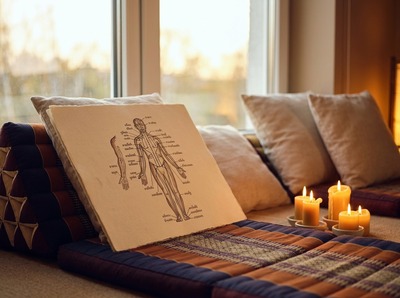
I talked her through every step along the way, checking the pressure felt right throughout. That kind of pacing matters even more when I’m working a pathway through your body, rather than just one sore spot you can point to.
Knowing the name of the line being worked helps too. It turns an unfamiliar stretch into something you can actually follow along with.
When Sen line work isn’t the right fit
Maybe you have a specific injury. Maybe you’d rather not be stretched at all. Another treatment style might suit you better, and that’s a fair chat to have before you book your appointment.
Thai Massage Greenock also offers Thai Oil Massage and Thai Sports Massage. Both give you that flowing pressure work, without the mat-based stretching that Sen line work relies on.
Next time you read that Thai massage ‘boosts flexibility,’ it’s worth asking which line actually did the work. Sen Sumana, Ittha and Pingkhala, Kalathari, Sahatsarangsi and Thawari each solve a different problem. Knowing which one I’m working on is the difference between a vague wellness hour and a session that’s genuinely built around what your body needs.
The studio sits on Kelly Street in Greenock, a short run in from Gourock, Port Glasgow, or Kilmacolm. Have a look at the full range of treatments at Thai Massage Greenock, or book a session and feel the difference yourself.
Sources:
- Sib Sen: 10 Principal Sen Lines in Thai Massage
- Nuad Thai, traditional Thai massage – UNESCO Intangible Cultural Heritage
- A Randomized Controlled Trial on the Effectiveness of Court-Type Traditional Thai Massage versus Amitriptyline in Patients with Chronic Tension-Type Headache – PubMed
- Sen Lines and Thai Massage Stretches
Found this useful? Add thaimassagegreenock.co.uk as a preferred source on Google so our latest guides show up first for you in Search and AI Overviews.